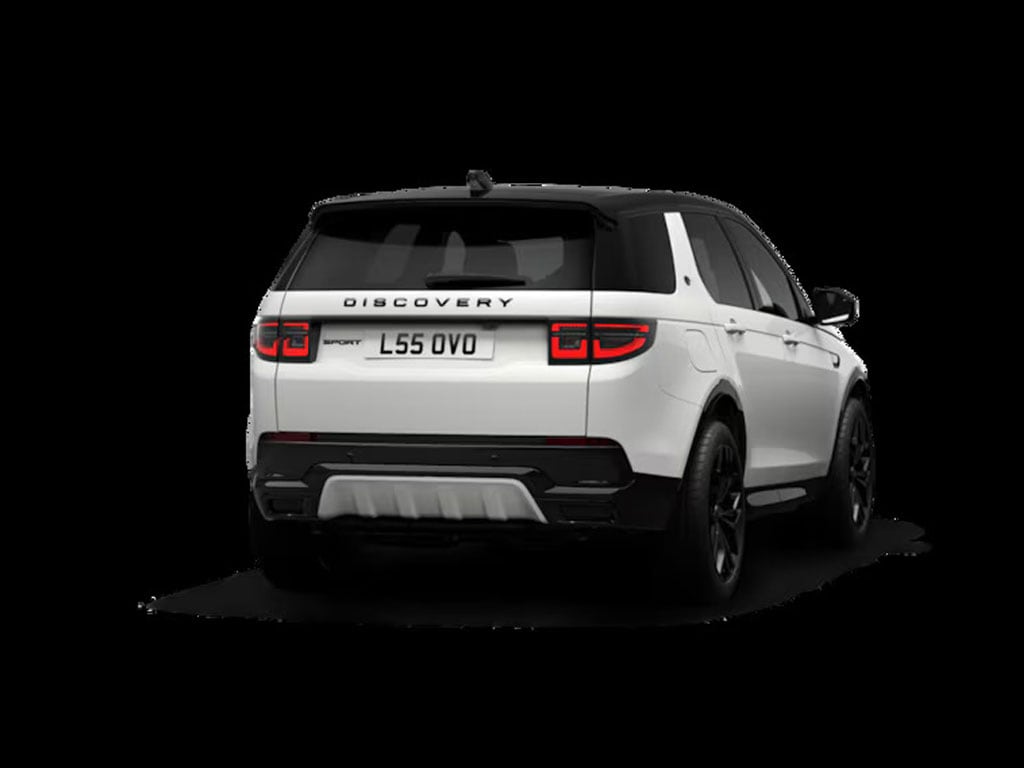
Quick Summary
The 2026 Discovery Sport tows up to 4,409 pounds when fitted with the Towing Pack, a figure that assumes a braked trailer and the correct factory hardware. Power comes from a 2.0-liter turbocharged four-cylinder producing 249 horsepower and 269 pound-feet, with peak torque arriving as low as 1,300 rpm for confident starts under load. Terrain Response 2, All Terrain Progress Control, Advanced Tow Assist, and Trailer Stability Assist handle the difficult parts of towing, while 8.35 inches of ground clearance and a 23.62-inch wading depth suit boat ramps and soft ground. That capacity covers personal watercraft, small fishing boats, teardrop campers, and loaded utility trailers.
Weekend plans in Northeast Ohio often involve something hitched to the back of an SUV. Boats head toward Lake Erie, campers roll south toward the Cuyahoga Valley, and utility trailers make hardware store runs far easier. Compact luxury SUVs have not always been the obvious answer for that kind of work, which is why the 2026 Land Rover Discovery Sport towing capacity draws so much attention from shoppers who want refinement and pulling strength in one vehicle. Here is a closer look at what that number really means in practice.
How Much the 2026 Discovery Sport Can Tow
Properly equipped with the Towing Pack, the 2026 Discovery Sport carries a maximum rating of 4,409 pounds, a figure that sits well ahead of what many drivers expect from a compact luxury SUV. That number applies to a braked trailer, meaning the load itself has a working brake system on at least one axle. Trailers without their own braking fall under a much lower limit, so the type of equipment behind the vehicle shapes what any given trip allows before you ever leave the driveway. The published rating also assumes the correct factory towing hardware is fitted, since a Discovery Sport without that equipment cannot reach the maximum figure at all. Anyone shopping with a specific boat or camper in mind should confirm both the trailer weight and the tongue weight, as those two measurements decide whether a load truly fits.
The Powertrain Behind the Rating
Every 2026 Discovery Sport uses a 2.0-liter turbocharged four-cylinder engine rated at 249 horsepower and 269 pound-feet of torque, paired with a nine-speed automatic transmission and standard all-wheel drive. Peak torque arrives between 1,300 and 4,500 rpm, and that low arrival point separates a comfortable tow from a strained one. Strong low-end torque allows the vehicle to pull away from a stop with a loaded trailer without demanding heavy throttle input or dramatic downshifts. The nine-speed transmission spreads its ratios across a wide range, holding the engine in its strongest band on inclines and keeping shifts smooth during highway merges. All-wheel drive arrives as standard equipment rather than an option, which delivers traction at the launch point where a loaded trailer places the heaviest demand on any drivetrain.
Towing Technology Built Into the Vehicle
Terrain Response 2 adapts throttle, transmission, and traction settings to the surface under the tires, which helps considerably on wet boat ramps and loose gravel campground approaches. All Terrain Progress Control functions as a low-speed cruise control, holding a steady crawl so you can concentrate on steering rather than pedal management. Advanced Tow Assist handles the part of towing that frustrates most drivers, letting reverse maneuvers happen through a rotary controller instead of the counterintuitive steering inputs that reversing a trailer normally demands. Trailer Stability Assist watches for sway and applies corrective braking before a small wobble builds into a genuine hazard on the highway. Ground clearance of 8.35 inches and a wading depth of 23.62 inches complete the picture for drivers who launch boats or cross soft ground on a regular basis.
What That Capacity Handles in Practice
A 4,409-pound ceiling covers a wide share of the loads Northeast Ohio drivers actually pull on a given weekend. A pair of personal watercraft on a double trailer, a small fishing boat headed toward the lake, or a teardrop camper bound for a state park all sit comfortably inside that figure. Utility trailers loaded with landscaping material, dirt bikes, or a season of yard debris fall well under the limit for most trips. Larger travel trailers and heavier cabin cruisers move past what a compact SUV should be asked to handle, so an honest weight assessment protects the vehicle and everyone sharing the road with you.
Ready to Hitch Up? Let's Get Your Discovery Sport Properly Equipped
That 4,409-pound figure only arrives with the right hardware fitted, and getting there is where our team comes in. At Land Rover Solon, we help you match your trailer weight and tongue weight to the correct Towing Pack specification before you commit to a vehicle. Our Land Rover certified technicians install factory towing hardware with genuine OEM parts at our service center, handling the hitch fitment and wiring correctly the first time. We also keep your Discovery Sport in condition between trips through routine maintenance, brake service, and tire work, since towing asks considerably more of those components than ordinary driving does.
Browse our Discovery Sport inventory online or schedule a service appointment with us today, and tell us what you plan to pull.
FAQs
The maximum rating is 4,409 pounds when the vehicle is properly
equipped with the Towing Pack. That figure applies to a braked trailer, meaning
the load carries working brakes on at least one axle. Without the correct
factory hardware fitted, a Discovery Sport cannot reach this maximum, so
equipment level determines what any individual vehicle can safely pull.
Yes. The published 4,409-pound figure assumes factory towing hardware
is installed, including the hitch receiver and wiring. A Discovery Sport
without that equipment falls well short of the maximum. Our certified
technicians handle fitment with genuine OEM parts, which keeps the electrical
connections and receiver rated correctly for the loads you intend to pull.
Advanced Tow Assist takes over the steering inputs required when
reversing a trailer, which is the part most drivers find frustrating. Rather
than turning the wheel in the counterintuitive direction, you guide the trailer
using a rotary controller and let the system manage the steering. The result is
far simpler backing into driveways, campsites, and boat ramps.