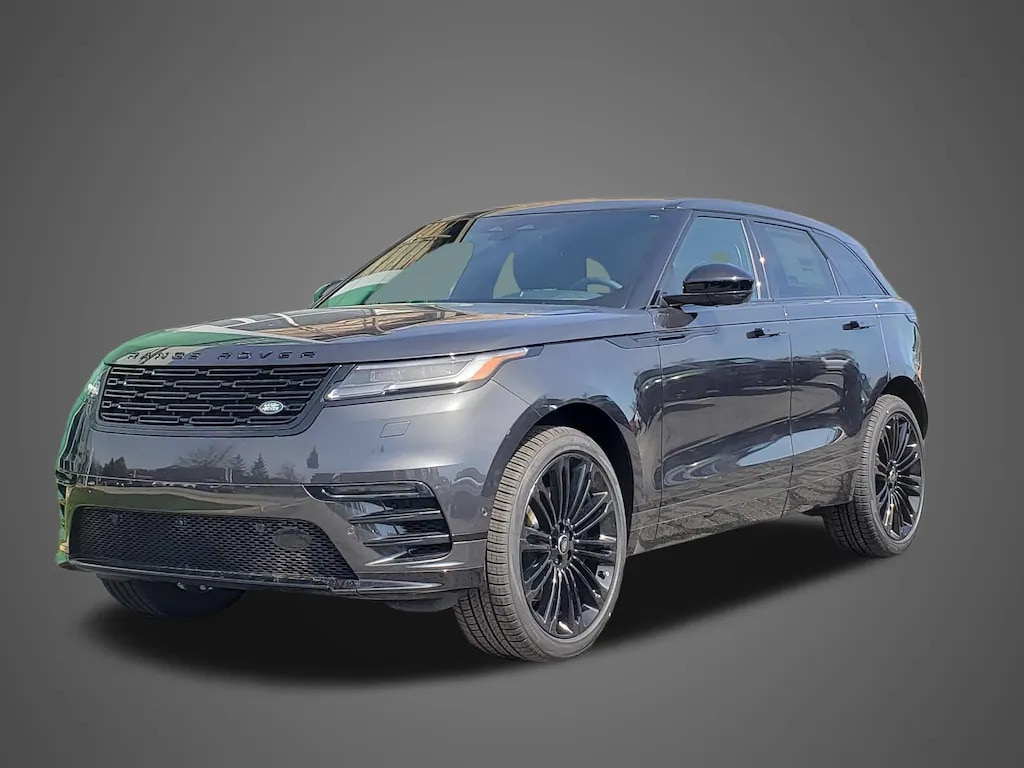
When you compare a Range Rover Velar vs BMW X5, you are looking at two very different ideas of luxury. The BMW X5 focuses on on-road comfort and power. The Range Rover Velar brings a mix of sleek style and true off-road ability. If one fits your life better depends on how you drive. We have studied the specs and driven both to give you a clear answer.
Check our new Range Rover Hybrid inventory to see the latest Velar models in person.
Design and First Impressions
The Velar looks like it belongs in a modern art museum. Its smooth sides, hidden door handles, and long hood give it a sophisticated, almost futuristic look. The BMW X5 is more muscular. It has large kidney grilles and sharp creases that say "powerful and ready."
Inside, the Velar has a minimalist cabin with two touchscreens and rich materials. The X5 feels more traditional, with physical buttons and a clear focus on driver comfort. Neither is bad. They just appeal to different tastes. The Velar draws you in with elegance. The X5 wraps you in familiar luxury.
Land Rover Solon: Your Local British Luxury Expert
Land Rover Solon has served the Cleveland area since 1991. We are a family owned business that specializes in British luxury. Our team knows the Velar inside and out. We give expert service, custom builds, and a personalized buying experience. When you compare these two SUVs, our advisors help you see why the Velar stands apart for buyers who want style and capability together.
Technical Specifications and Mechanicals
Let us look at what is under the hood. These numbers matter for real world driving.
Powertrain comparison:
- Velar base engine: 2.0-liter four-cylinder, 247 horsepower, 269 lb. ft of torque
- X5 base engine: 3.0-liter six-cylinder hybrid, 375 horsepower, 398 lb. ft of torque
The X5 makes significantly more power. That extra muscle helps it accelerate faster from a stop and when passing on highways. But power is not the only story. The Velar uses a lighter chassis and a lower center of gravity. This gives it a more agile feel in corners.
Transmission and drivetrain:
Both SUVs use eight-speed automatic transmissions. Both have all-wheel drive as standard. However, the systems work differently. The X5 sends most power to the rear wheels for a sporty feel. The Velar balances power evenly and includes a two-speed transfer case on some trims. That transfer case gives low range gearing for serious off-road climbing.
Suspension setup:
- Velar: Front double wishbone, rear integral link with optional air suspension
- X5: Front double wishbone, rear multi-link with optional air suspension
The X5's standard suspension feels softer and more comfortable on highways. The Velar's standard suspension is firmer. With optional air suspension, the Velar can raise its body by more than two inches. That extra clearance is key for rocky trails or deep snow.
Braking and towing:
Both SUVs have four-wheel disc brakes with anti-lock systems. The Velar has a towing capacity of 5,291 pounds when properly equipped. The X5 can tow up to 7,200 pounds. If you haul a boat or trailer, the X5 has a clear advantage.
Fuel economy estimates (2024 model year):
- Velar: 22 miles per gallon city, 26 highways
- X5: 23 miles per gallon city, 27 highways
The hybrid system in the X5 helps it save a little fuel. But the difference is small. Both will cost about the same to fill up each week.
On Road Driving Feel
On normal roads, the X5 feels planted and confident. Its suspension absorbs bumps well, and the steering gives good feedback. It is a joy to drive for long trips or daily commutes.
The Velar rides a bit stiffer, especially with larger wheels. Some drivers like that connected feel. Others find it less forgiving than the X5. However, the Velar stays quiet inside. Wind and road noise are low, making highway cruising relaxing.
Explore our new inventory to compare Velar trims and options side by side.
Off Road Capability
This is where the comparison shifts dramatically. The X5 has all-wheel drive but remains a road focused vehicle. Ground clearance, approach angles, and traction systems are basic.
The Velar comes from a family of vehicles built for rough terrain. You get standard all-wheel drive, hill descent control, and a terrain response system with modes for grass, gravel, snow, mud, and sand. With optional air suspension, the Velar can raise its body to clear rocks and deep ruts.
Key off road angles for Velar (with air suspension raised):
- Approach angle: 25.8 degrees
- Breakover angle: 21.1 degrees
- Departure angle: 27.3 degrees
- Maximum wading depth: 23.6 inches
The X5 cannot give these numbers. For weekend campers, photographers, or anyone who lives near mountains or farms, the Velar gives freedom the X5 cannot match.
Interior Space and Practicality
Cargo space is similar. The Velar gives about 30.9 cubic feet behind the rear seats and 57.2 cubic feet with seats folded. The X5 gives you 33.9 cubic feet behind the rear seats and 60 cubic feet folded. The X5 has a small advantage for hauling large items.
Rear seat room goes to the X5 as well. Legroom measures 39.1 inches in the Velar versus 40.8 inches in the X5. Tall passengers will appreciate the extra space in the BMW.
However, the Velar feels more special inside. The materials, the clean layout, and the attention to detail create a premium experience that many buyers prefer over the X5's more practical cabin.
Technology and Safety Features
Both SUVs feature large touchscreens, smartphone integration, and advanced safety features. Standard equipment on both includes:
- Automatic emergency braking
- Blind spot monitoring
- Rear cross traffic alert
- Lane departure warning
The Velar's dual screen setup (upper for infotainment, lower for climate and vehicle controls) looks cutting edge. Some users find it distracting at first. The X5's single screen with physical buttons is easier to use without looking away from the road.
Neither system is bad. The Velar wins on style and innovation. The X5 wins on simplicity and ease of use.
Value and Ownership Costs
Starting prices (2025 models):
- Range Rover Velar: $61,500
- BMW X5: $66,300
The Velar costs about $4,800 less to start. However, adding options like the larger engine, air suspension, or premium sound can close that gap quickly. The X5 holds its value slightly better over time, according to industry data. But maintenance and repair costs are similar for both brands.
See our used inventory for certified pre-owned Velar models that give great value.
Which One Should You Choose
Choose the BMW X5 if:
- You drive almost exclusively on paved roads
- You want strong acceleration and a comfortable ride
- Rear seat space and cargo volume are top priorities
- You prefer traditional controls over touchscreens
Choose the Land Rover Range Rover Velar if:
- You go off road or face snow, mud, or rough trails
- Design and style matter as much as performance
- You want a more distinctive, less common SUV
- You value a premium interior with modern technology
When we compare the Range Rover Velar vs BMW X5, there is no single winner. The X5 is better for highway driving and hauling people. The Velar is better for design, off road freedom, and a more exclusive feel.
Land Rover Solon invites you to test drive the Velar yourself. Feel how it handles both city streets and back roads. See the interior quality up close.
The best way to make a decision is to drive both. But if your life includes adventure, style, and capability, the Velar is the smarter choice. Visit Land Rover Solon to explore our new 2026 Range Rover Velar Dynamic SE and other luxury models. Our team will help you find the perfect SUV for your needs.